
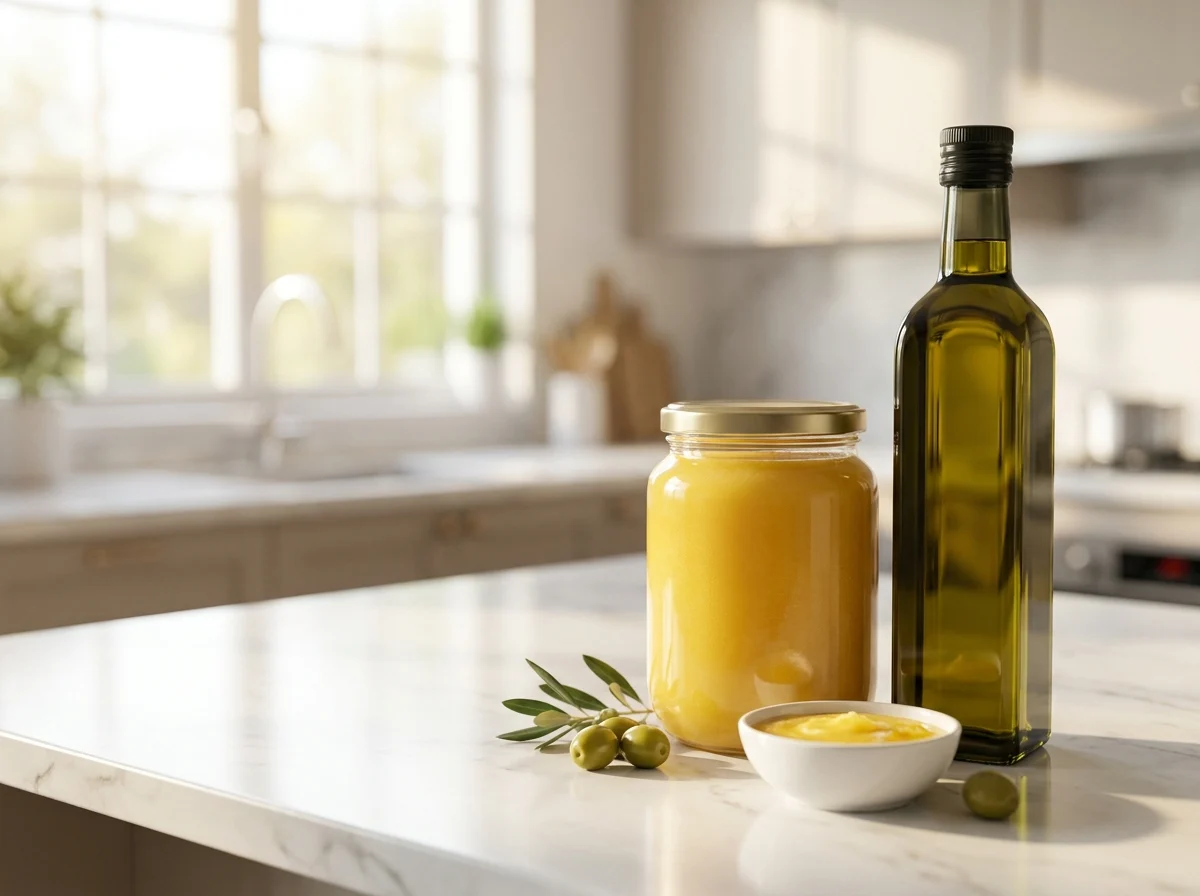
Ghee and olive oil are two popular ingredients found in modern kitchens around the world. Both can add flavor to food, but they are very different products with different characteristics and culinary uses.
In South Asian cooking, ghee has traditionally been used in dishes such as biryani, pulao, khichuri, sweets, paratha, and desserts. Olive oil, meanwhile, has become increasingly popular for salad dressings, sautéing, marinades, pasta, and various international dishes.
So, which one is better?
The answer depends on how you plan to use it.
Instead of asking whether ghee or olive oil is universally “better,” it is more useful to understand their differences and choose the right product for the right cooking purpose.
What Is Ghee?
Ghee is a form of clarified butter.
It is traditionally made by heating butter and separating much of its water and milk solids from the butterfat.
The result is a rich, golden cooking fat with a distinctive buttery aroma and flavor.
Ghee is particularly popular in South Asian cuisine because even a relatively small amount can add a rich aroma to food.
What Is Olive Oil?
Olive oil is produced from olives, the fruit of the olive tree.
It is widely used in Mediterranean and international cooking and is available in different varieties.
Extra virgin olive oil is produced through mechanical processes without chemical refining and is valued for its flavor and characteristics.
Other olive oil varieties can have different processing methods and culinary properties.
Ghee vs Olive Oil: Key Differences
Although both are used in cooking, they differ in several ways.
Source
Ghee is derived from butter, which comes from milk.
Olive oil comes from the fruit of the olive tree.
Flavor
Ghee generally has a rich, buttery and slightly nutty aroma.
Olive oil can have a range of flavors depending on the variety, origin, processing, and freshness. Extra virgin olive oil may have fruity, grassy, peppery, or mildly bitter characteristics.
Culinary Use
Ghee is particularly suitable for many South Asian dishes and rich traditional recipes.
Olive oil is commonly used for salads, dressings, marinades, sautéing, pasta, and many Mediterranean-style dishes.
Where Is Ghee Commonly Used?
Ghee is an excellent choice when you want to add a rich traditional flavor.
It can be used in:
- Biryani
- Pulao
- Khichuri
- Halwa
- Traditional sweets
- Paratha
- Roti
- Rice dishes
- Desserts
- Various South Asian recipes
Ghee is often used as a finishing ingredient as well as a cooking fat.
Where Is Olive Oil Commonly Used?
Olive oil can be extremely versatile.
It is commonly used for:
Salad Dressing
Extra virgin olive oil is often used as the base of salad dressings.
It can be combined with lemon juice, vinegar, herbs, garlic, and other ingredients.
Sautéing
Depending on the specific olive oil and cooking temperature, it can be used for sautéing vegetables and other foods.
Marinades
Olive oil can be combined with herbs, spices, garlic, lemon, and other ingredients to create marinades.
Pasta
Olive oil is frequently used in pasta dishes, sauces, and finishing preparations.
Is Ghee Healthy?
Ghee is a source of fat and is calorie-dense.
It can be part of a balanced diet, but the amount consumed matters.
Because nutritional needs differ between individuals, people with specific dietary requirements or health conditions should consider advice from an appropriately qualified healthcare professional.
It is better to think of ghee as one cooking fat among many rather than assuming that consuming larger amounts is automatically beneficial.
Is Olive Oil Healthy?
Olive oil is particularly known for being rich in monounsaturated fat, and extra virgin olive oil also contains naturally occurring antioxidant compounds.
However, olive oil is still a calorie-dense fat.
Using a high-quality oil does not mean unlimited consumption is appropriate.
A balanced overall diet and reasonable portion sizes remain important.
Ghee or Olive Oil: Which Should You Buy?
The best choice depends on your cooking style.
Choose Ghee When:
You want:
- Rich buttery flavor
- Traditional South Asian taste
- A finishing fat for rice dishes
- A rich ingredient for desserts
- Traditional cooking and sweets
Choose Olive Oil When:
You want:
- A versatile plant-based cooking oil
- Salad dressing
- Mediterranean-style cooking
- Marinades
- Pasta dishes
- A distinctive fruity or peppery flavor from extra virgin olive oil
Many households can use both.
There is no requirement to choose only one.
How to Choose Good Quality Ghee
When buying ghee, look at several factors.
Check the Ingredients
Read the ingredient list and understand what the product contains.
Check the Packaging
Make sure the jar or container is properly sealed and undamaged.
Check the Date
Always check the manufacturing and expiry/best-before information.
Check Storage Instructions
Follow the manufacturer’s recommended storage conditions after opening.
How to Choose Olive Oil
Choosing olive oil also requires attention to the label.
Look at the Type
Different types of olive oil are intended for different purposes.
If you are specifically looking for extra virgin olive oil, make sure the label clearly identifies it as such.
Check the Origin Information
Many olive oil bottles provide information about where the olives were grown or where the oil was produced.
Check the Bottle
Olive oil is commonly sold in dark glass or other packaging designed to protect it from light.
Inspect the packaging and ensure the bottle is properly sealed.
Check the Best-Before Date
As with any food product, check the date before purchasing.
How Should Ghee Be Stored?
Ghee should be stored according to the manufacturer’s instructions.
Keep the container tightly closed and protect it from excessive heat, moisture, and direct sunlight.
Always use a clean and dry spoon when taking ghee from the container.
How Should Olive Oil Be Stored?
Olive oil should generally be protected from heat, light, and air.
Keep the bottle properly closed when not in use.
Avoid leaving it beside a hot stove or in direct sunlight for extended periods.
Follow the manufacturer’s storage instructions for the specific product.
Common Mistakes When Buying Cooking Oils and Fats
Choosing Only by Price
The cheapest product is not necessarily the best fit for your needs.
Ignoring the Label
Always check the product type, ingredients, quantity, and date.
Storing Oil Near Heat
Excessive heat can negatively affect the quality of many cooking oils.
Buying More Than You Can Use
Buying a very large bottle may not be practical if you use olive oil or ghee infrequently.
Freshness and proper storage are important considerations.
Can You Use Ghee and Olive Oil Together?
Yes, depending on the recipe.
Cooking is flexible, and different fats can be combined in certain recipes to achieve a particular flavor or texture.
For example, a small amount of ghee can be used to add a rich traditional aroma while another cooking oil is used for the main cooking process.
The appropriate combination depends on the recipe and personal preference.
Ghee vs Olive Oil: Quick Comparison
| Feature | Ghee | Olive Oil |
|---|---|---|
| Source | Butter/milk | Olives |
| Flavor | Rich, buttery | Fruity, grassy or mild depending on type |
| Common Cuisine | South Asian | Mediterranean & international |
| Popular Uses | Biryani, pulao, sweets | Salads, marinades, pasta |
| Texture | Solid/semi-solid depending on temperature | Liquid |
| Main Nutrient | Fat | Fat |
| Storage | Cool, dry place according to label | Away from heat and light |
| Best For | Rich traditional flavor | Versatile cooking and dressing |
Frequently Asked Questions
Is ghee better than olive oil?
Neither is universally better. They are different cooking fats with different culinary characteristics. Your choice should depend on your recipe, taste preferences, and overall dietary needs.
Can olive oil be used for cooking?
Yes. Olive oil can be used for various cooking applications. The appropriate use depends on the type of olive oil and the cooking method.
Can ghee be used for baking?
Yes. Ghee can be used in many baking and dessert recipes where its rich flavor is desirable.
Which is better for salad dressing?
Extra virgin olive oil is a popular choice for salad dressing because of its flavor and aroma.
How should I store olive oil?
Keep olive oil tightly closed and protect it from excessive heat, light, and air. Follow the specific storage instructions on the bottle.
How should I store ghee?
Keep ghee properly covered and store it according to the manufacturer’s instructions, away from excessive heat and moisture.
Final Thoughts
Ghee and olive oil both have an important place in the kitchen, but they serve different culinary purposes.
Ghee is an excellent choice when you want rich, buttery aroma and traditional South Asian flavor. Olive oil offers a different flavor profile and is particularly popular for salads, marinades, pasta, and many international dishes.
Instead of trying to find one universal winner, consider keeping the right product for the right recipe.
Most importantly, choose quality products, read the labels carefully, store them properly, and use cooking fats in appropriate amounts as part of a balanced diet.


